PITCH: Layla Wa Majnun: My Arabian-Nights game pitch

Arabian Nights
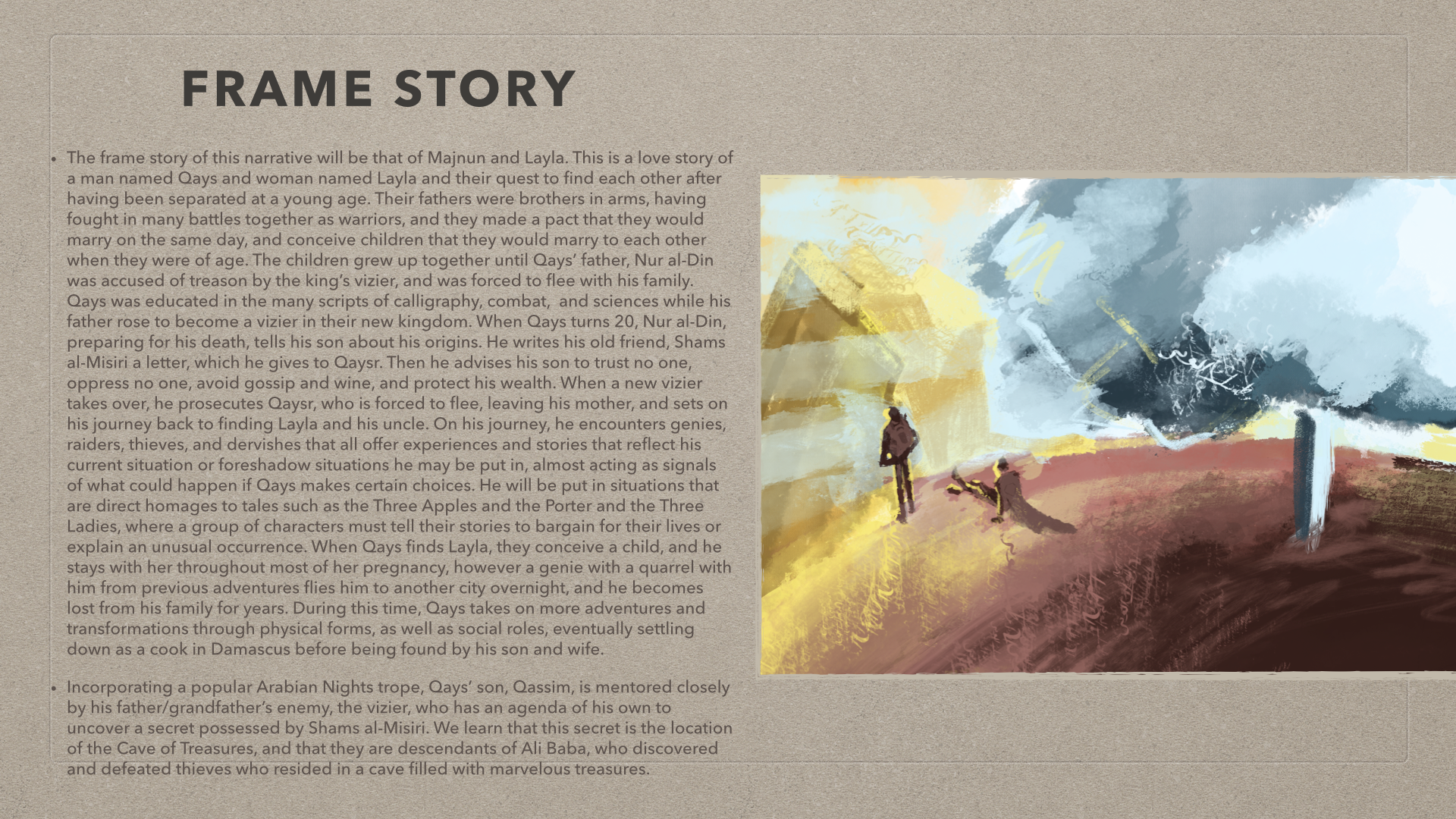
For my class at NYU, “Arabian Nights” where we read the book and adjacent Arabic Literature, I was tasked with creating a creative assignment based on the stories we read. I came up with “Layla Wa Majnun” which combines the popular tale of Majnun Layla with a story from Arabian Nights: Tale of the Two Viziers.







The Premise
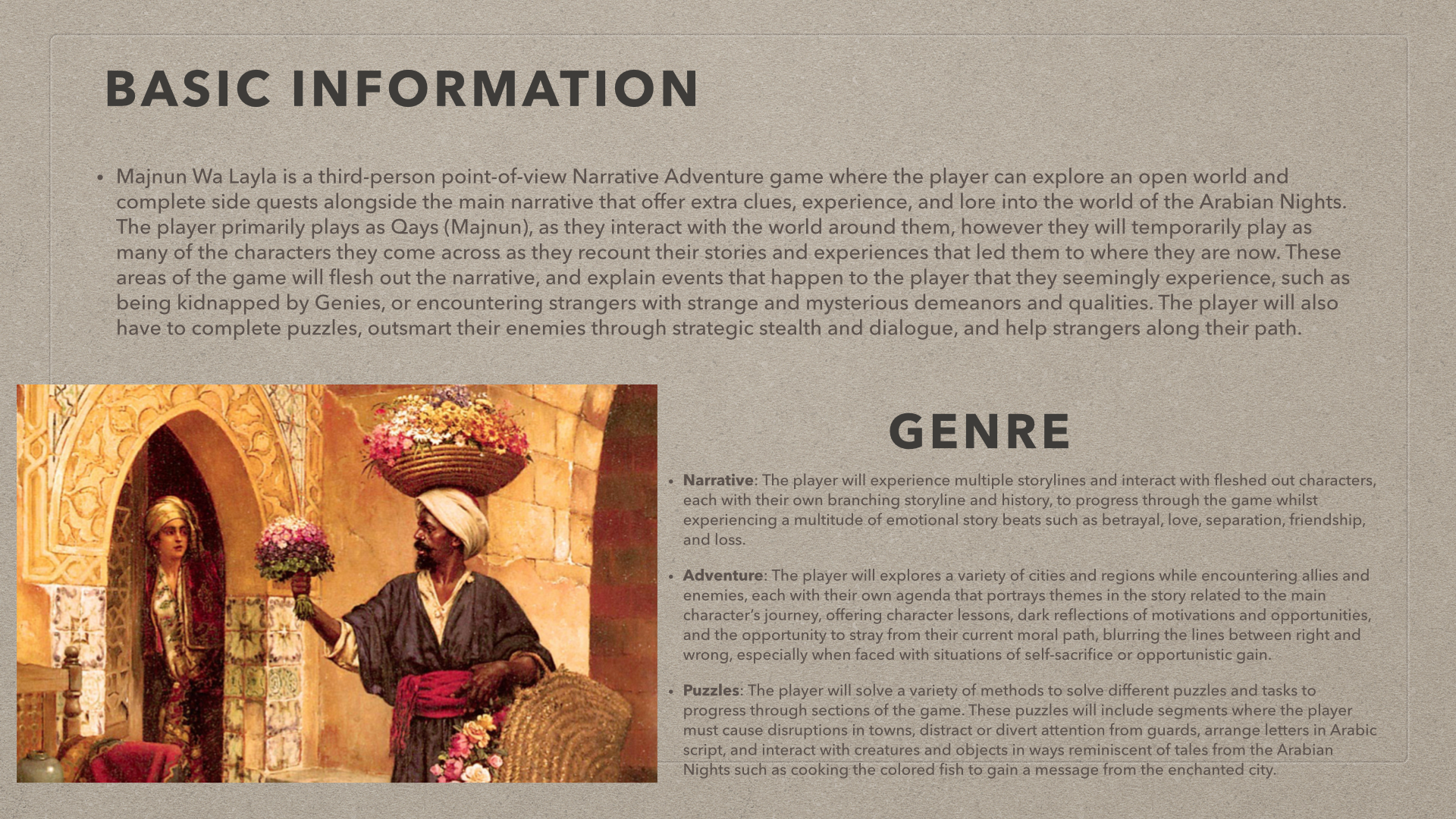
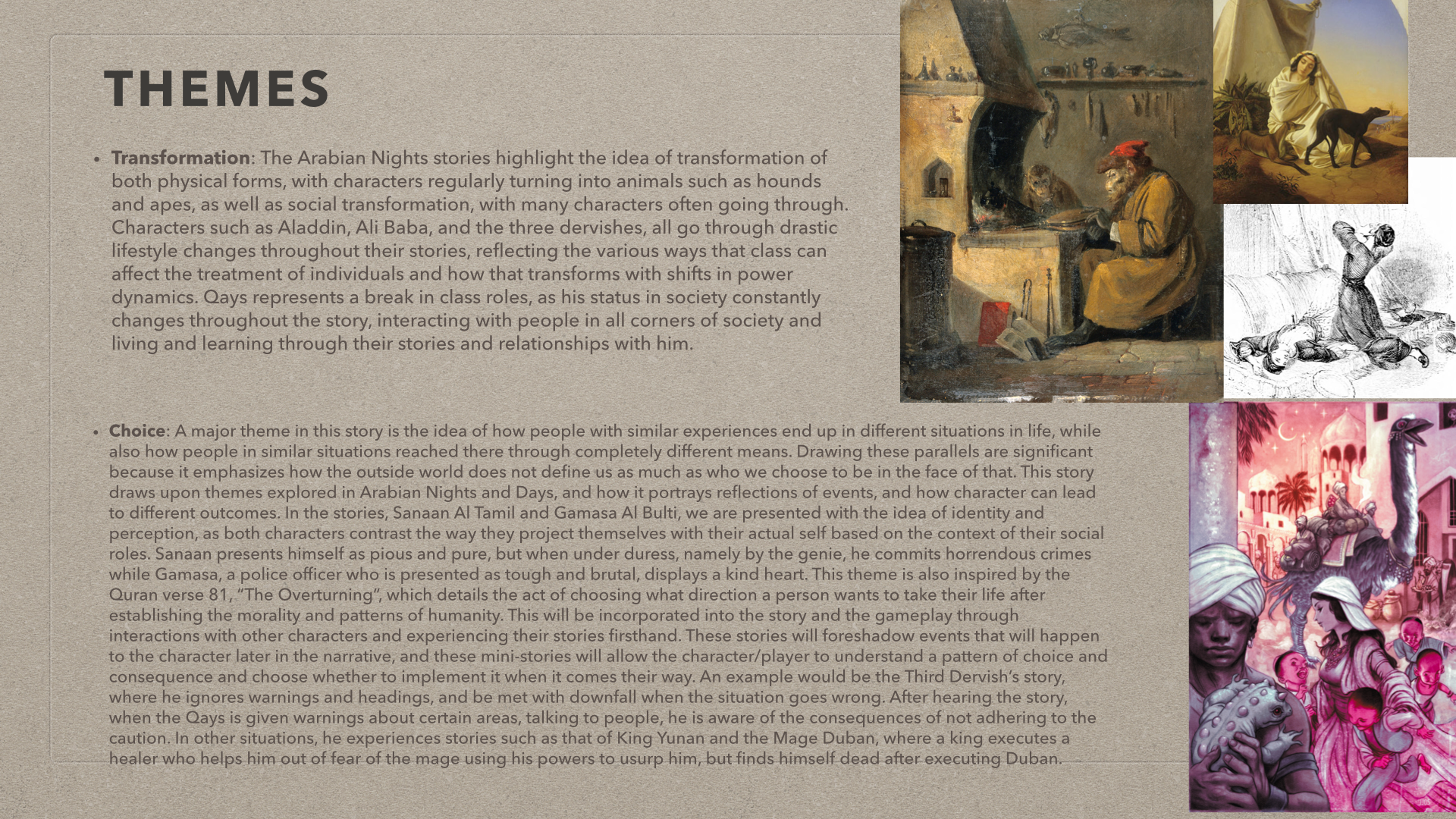
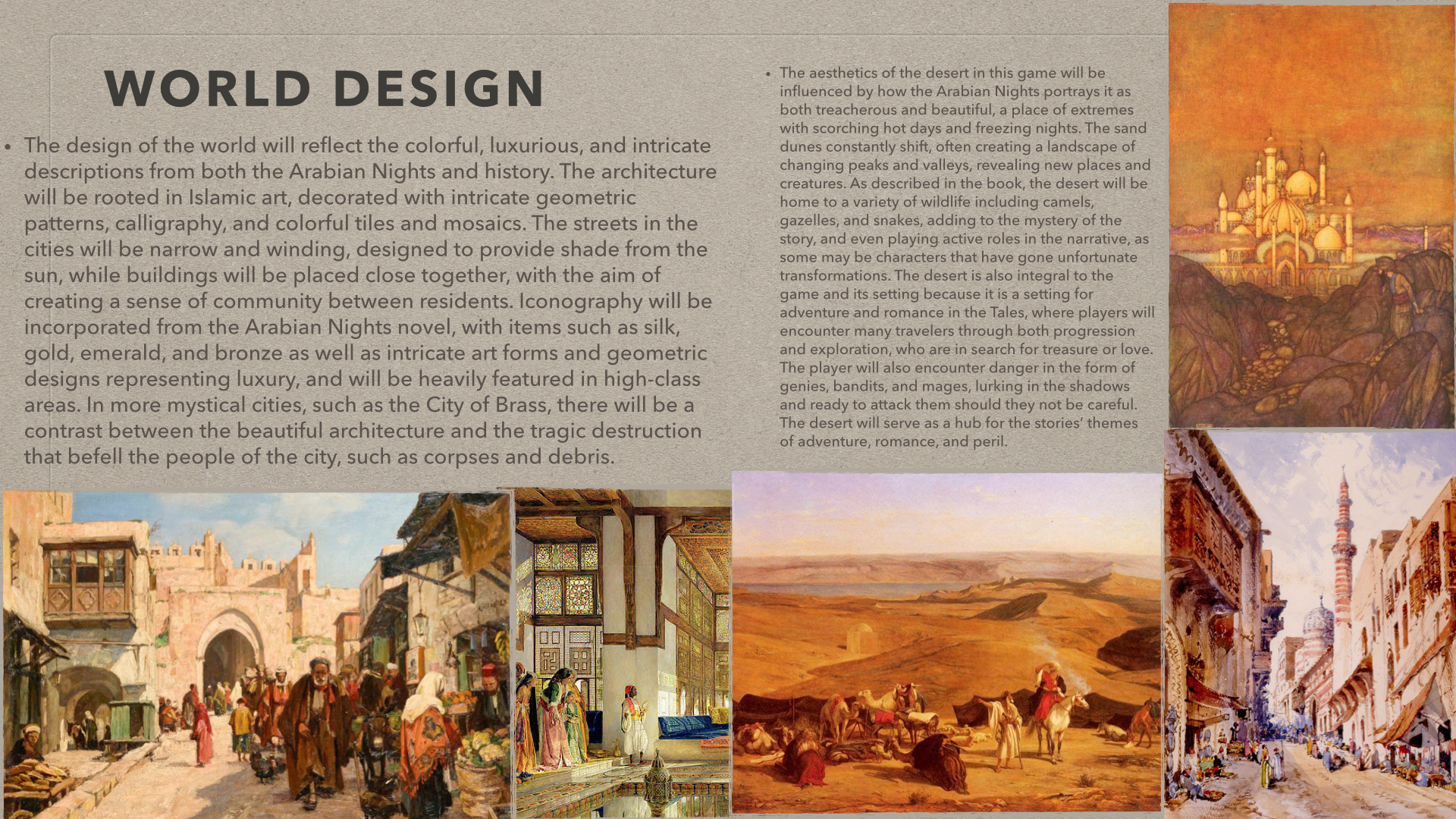
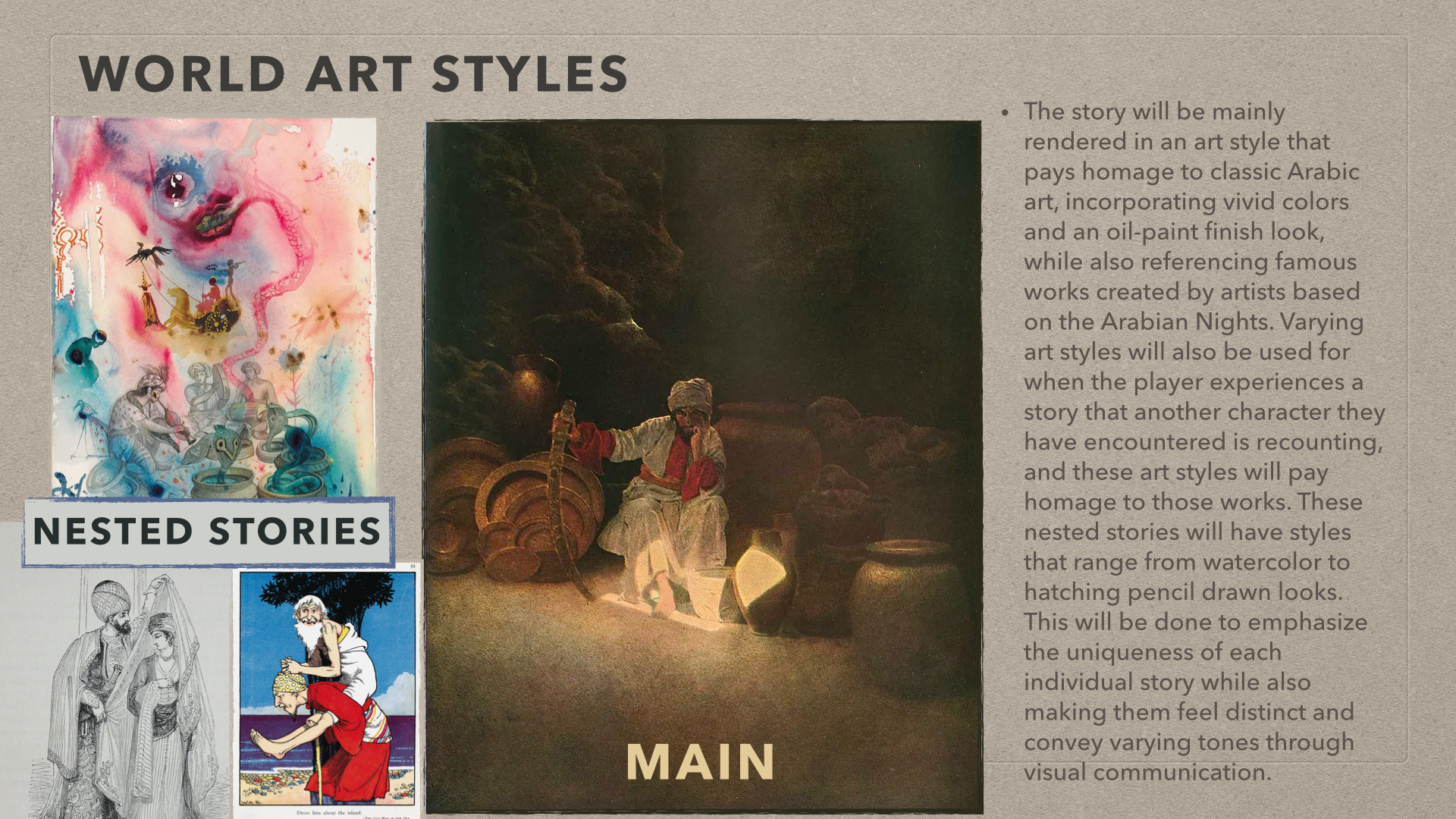
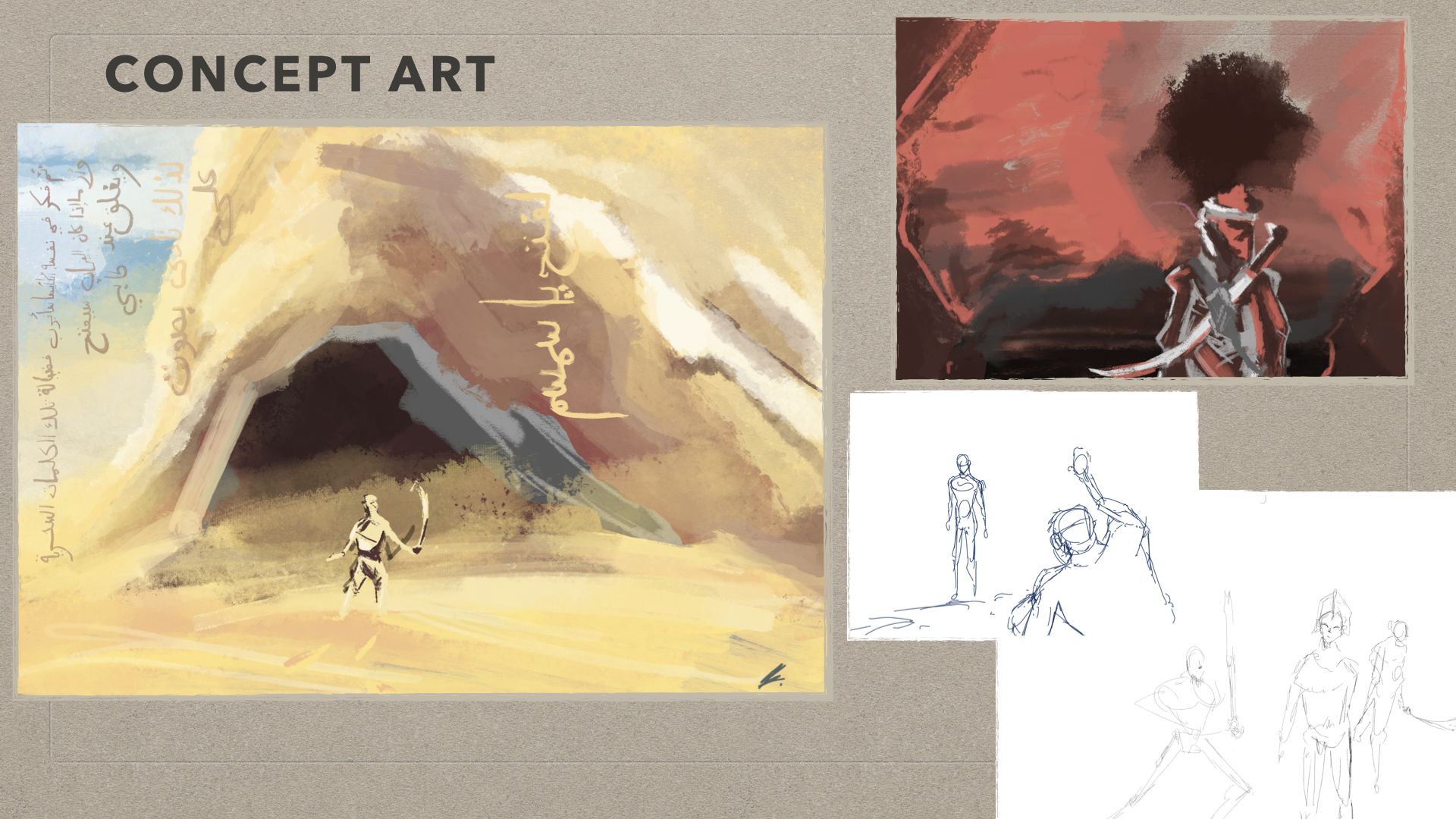
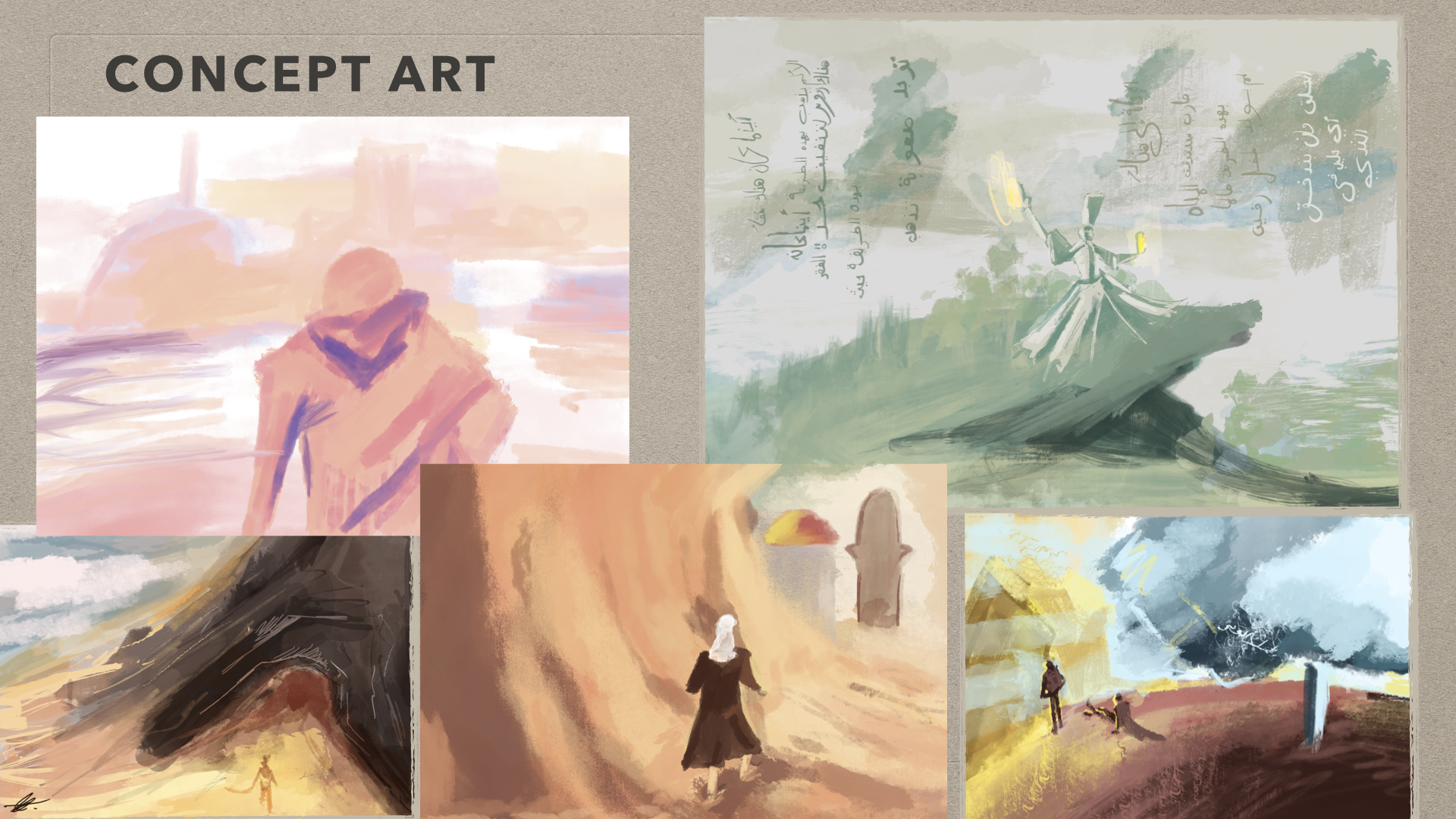
Majnun Wa Layla is a third-person point-of-view Narrative Adventure game where the player can explore an open world and complete side quests alongside the main narrative that offer extra clues, experience, and lore into the world of the Arabian Nights. The player primarily plays as Qas (Majnun), as they interact with the world around them, however they will temporarily play as many of the characters they come across as they recount their stories and experiences that led them to where they are now. These areas of the game will flesh out the narrative, and explain events that happen to the player that they seemingly experience, such as being kidnapped by Genies, or encountering strangers with strange and mysterious demeanors and qualities. The player will also have to complete puzzles, outsmart their enemies through strategic stealth and dialogue, and help strangers along their path.
Majnun Layla
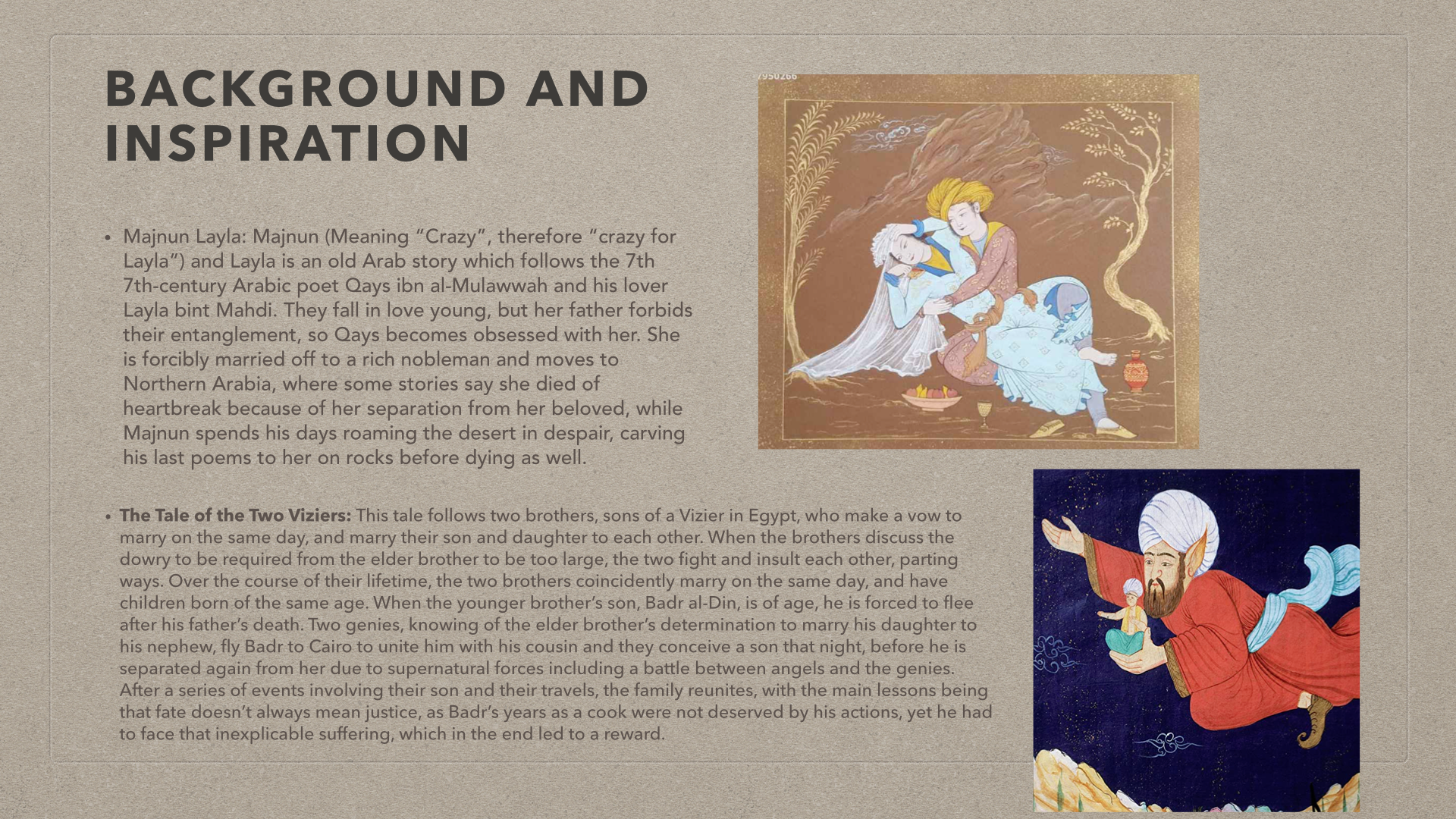
Majnun Layla: Majnun (Meaning “Crazy”, therefore “crazy for Layla”) and Layla is an old Arab story which follows the 7th 7th-century Arabic poet Qays ibn al-Mulawwah and his lover Layla bint Mahdi. They fall in love young, but her father forbids their entanglement, so Qays becomes obsessed with her. She is forcibly married off to a rich nobleman and moves to Northern Arabia, where some stories say she died of heartbreak because of her separation from her beloved, while Majnun spends his days roaming the desert in despair, carving his last poems to her on rocks before dying as well.
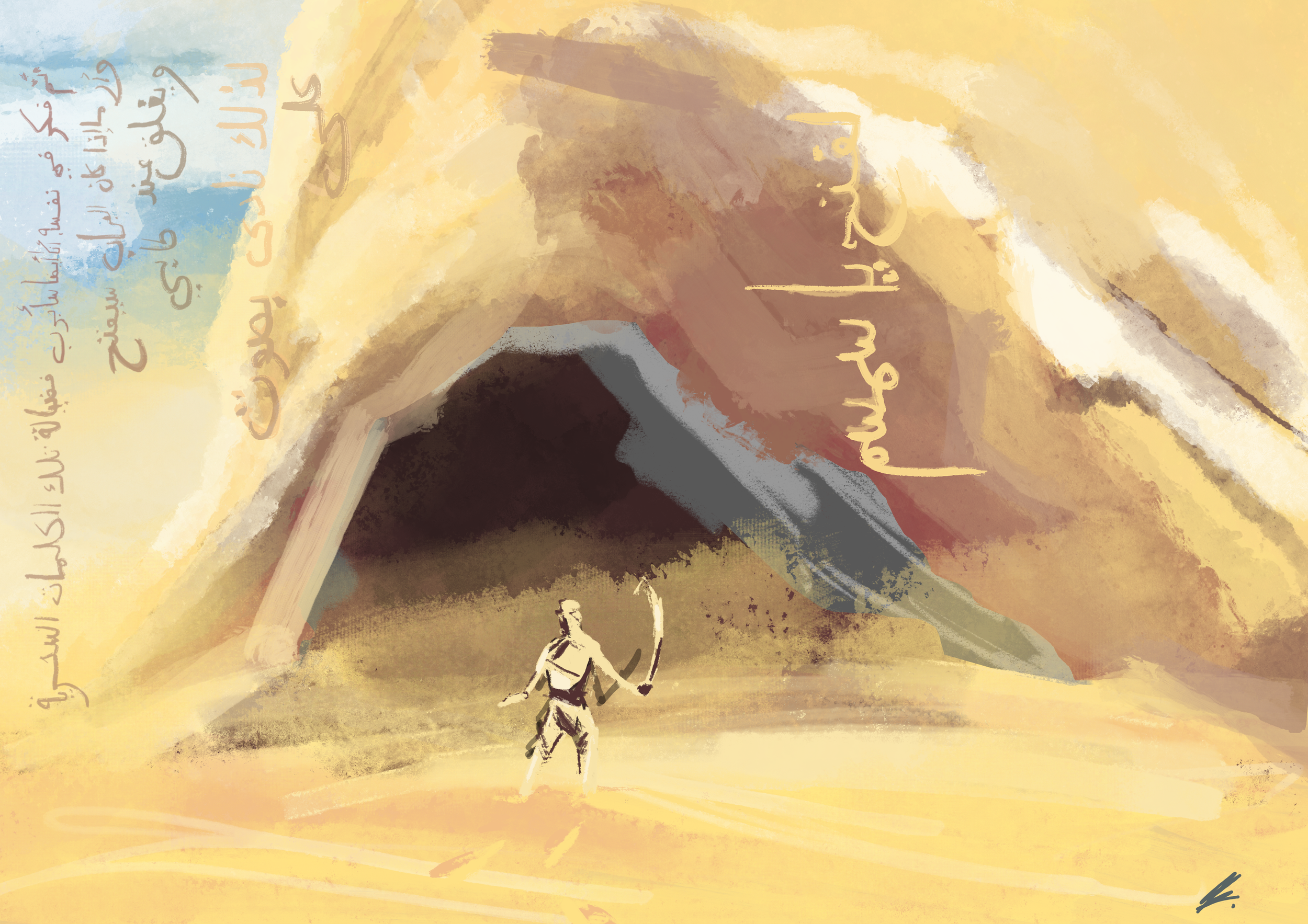
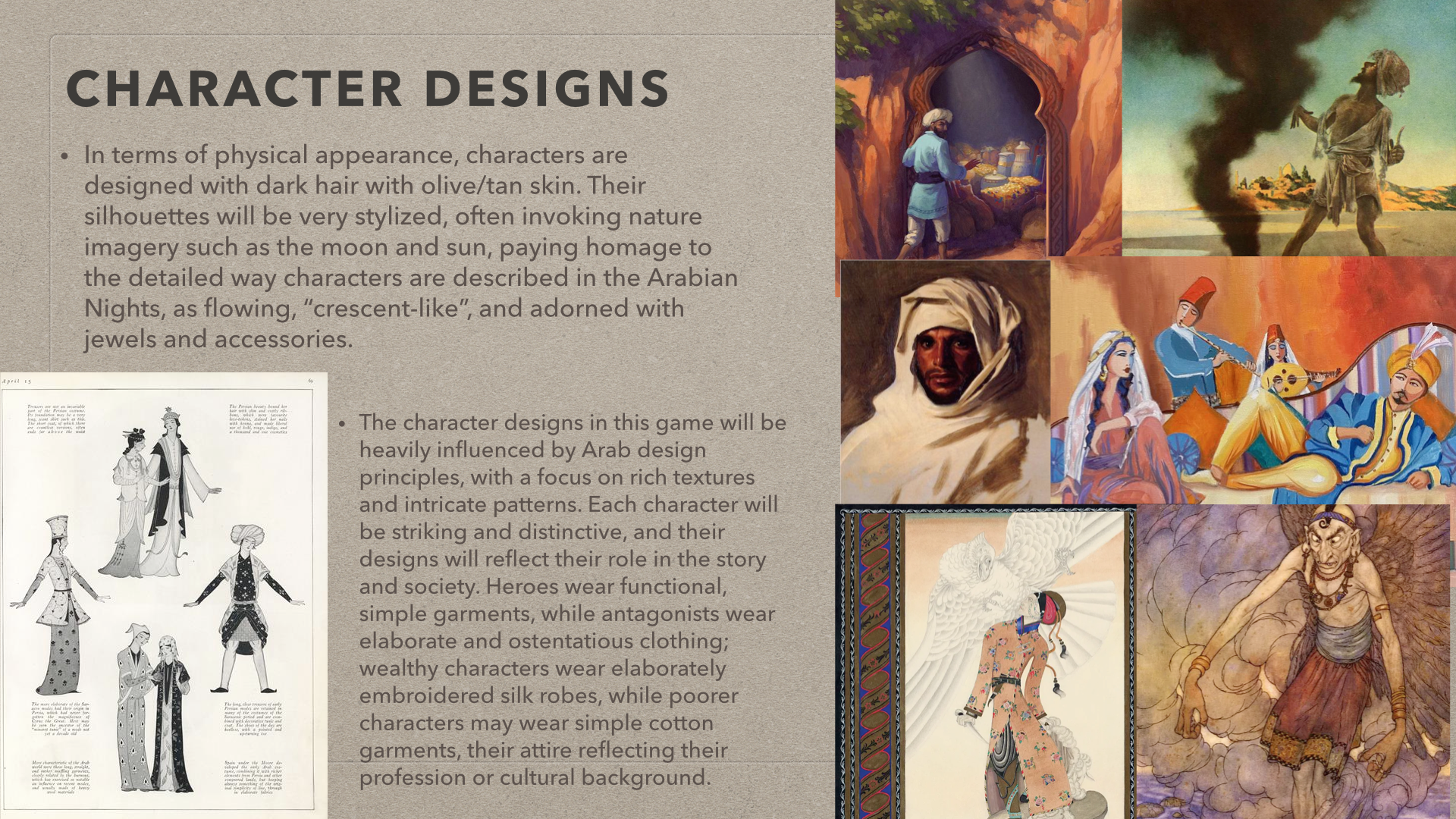
Artwork of excerpt from “Ali Baba and the Forty Thieves”
Tale of the Two Viziers
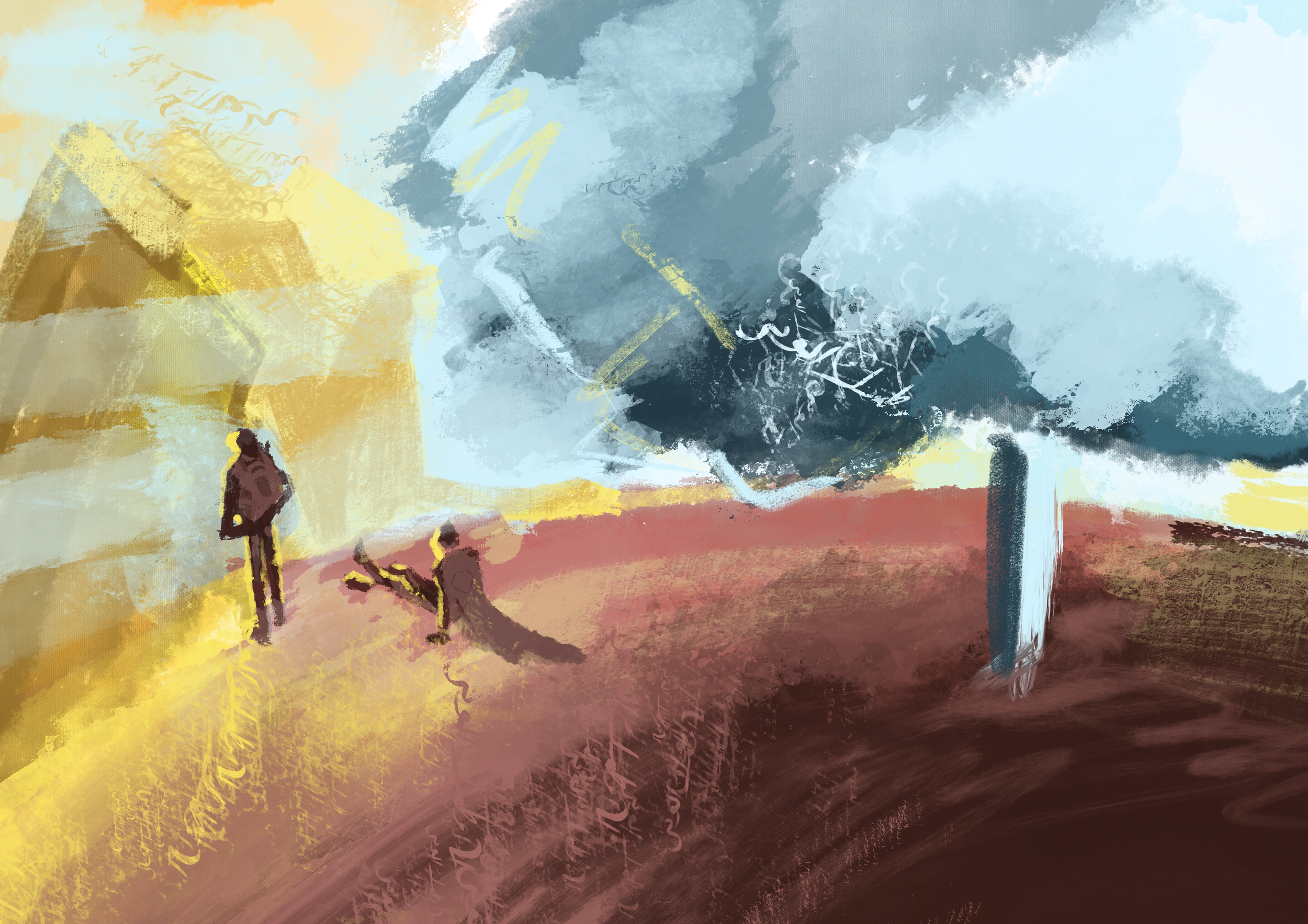
Concept of the two Viziers in their youth
The Tale of the Two Viziers: This tale follows two brothers, sons of a Vizier in Egypt, who make a vow to marry on the same day, and marry their son and daughter to each other. When the brothers discuss the dowry to be required from the elder brother to be too large, the two fight and insult each other, parting ways. Over the course of their lifetime, the two brothers coincidently marry on the same day, and have children born of the same age. When the younger brother’s son, Badr al-Din, is of age, he is forced to flee after his father’s death. Two genies, knowing of the elder brother’s determination to marry his daughter to his nephew, fly Badr to Cairo to unite him with his cousin and they conceive a son that night, before he is separated again from her due to supernatural forces including a battle between angels and the genies. After a series of events involving their son and their travels, the family reunites, with the main lessons being that fate doesn’t always mean justice, as Badr’s years as a cook were not deserved by his actions, yet he had to face that inexplicable suffering, which in the end led to a reward.